Overview
The assignment was to design a product that solves a humanitarian issue using electrical components and a Raspberry Pi. I chose medication adherence because missed daily doses are a simple but common problem with real consequences. The prototype connected physical interaction, circuit wiring, and Python control logic into a simple reminder workflow that could be used without a monitor.
Objectives
- Develop a time-based dispensing concept that reminds users to take medication.
- Build a functional prototype using circuits, Raspberry Pi, and Python.
- Implement a rotation mechanism that is easy to understand and use.
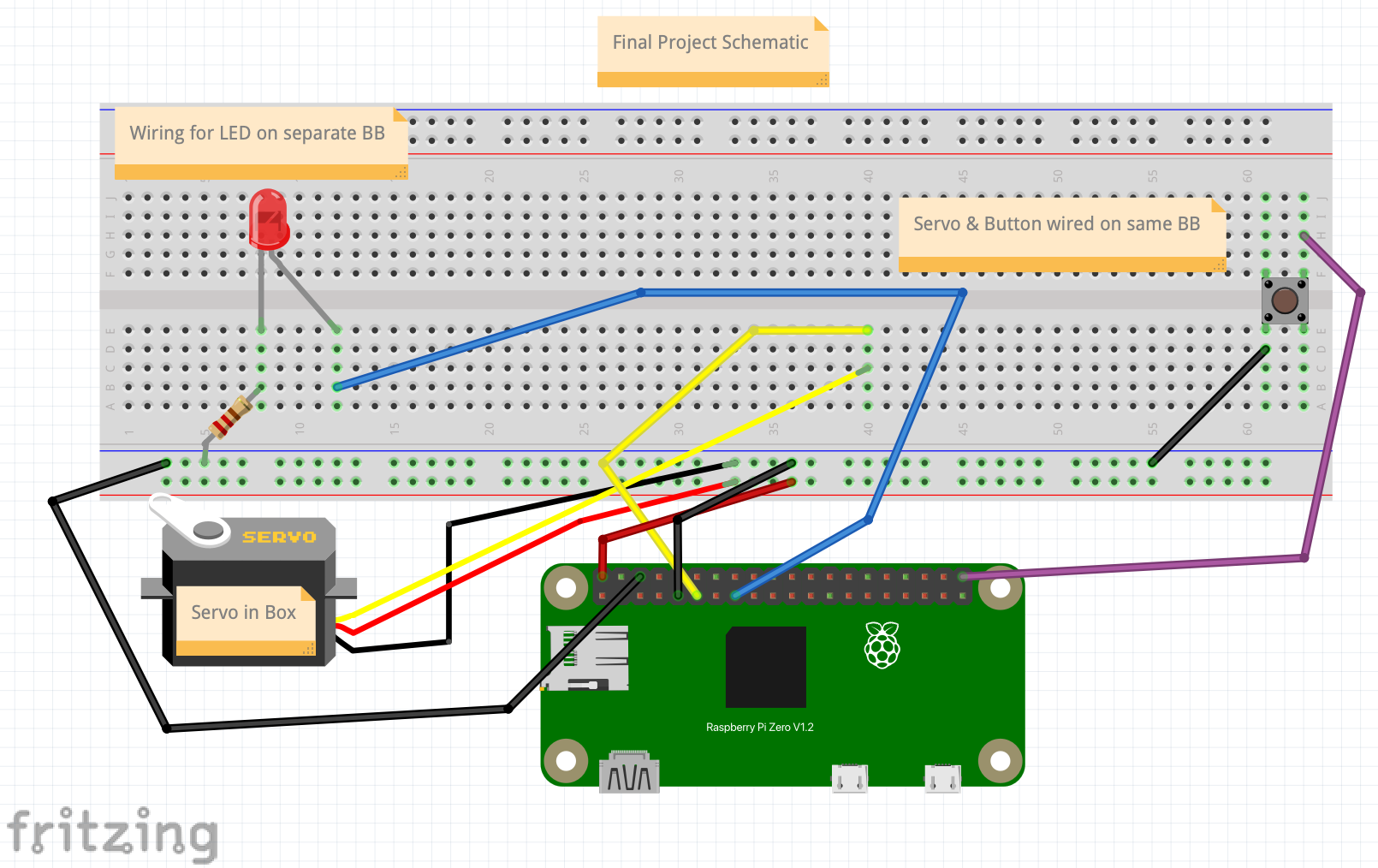
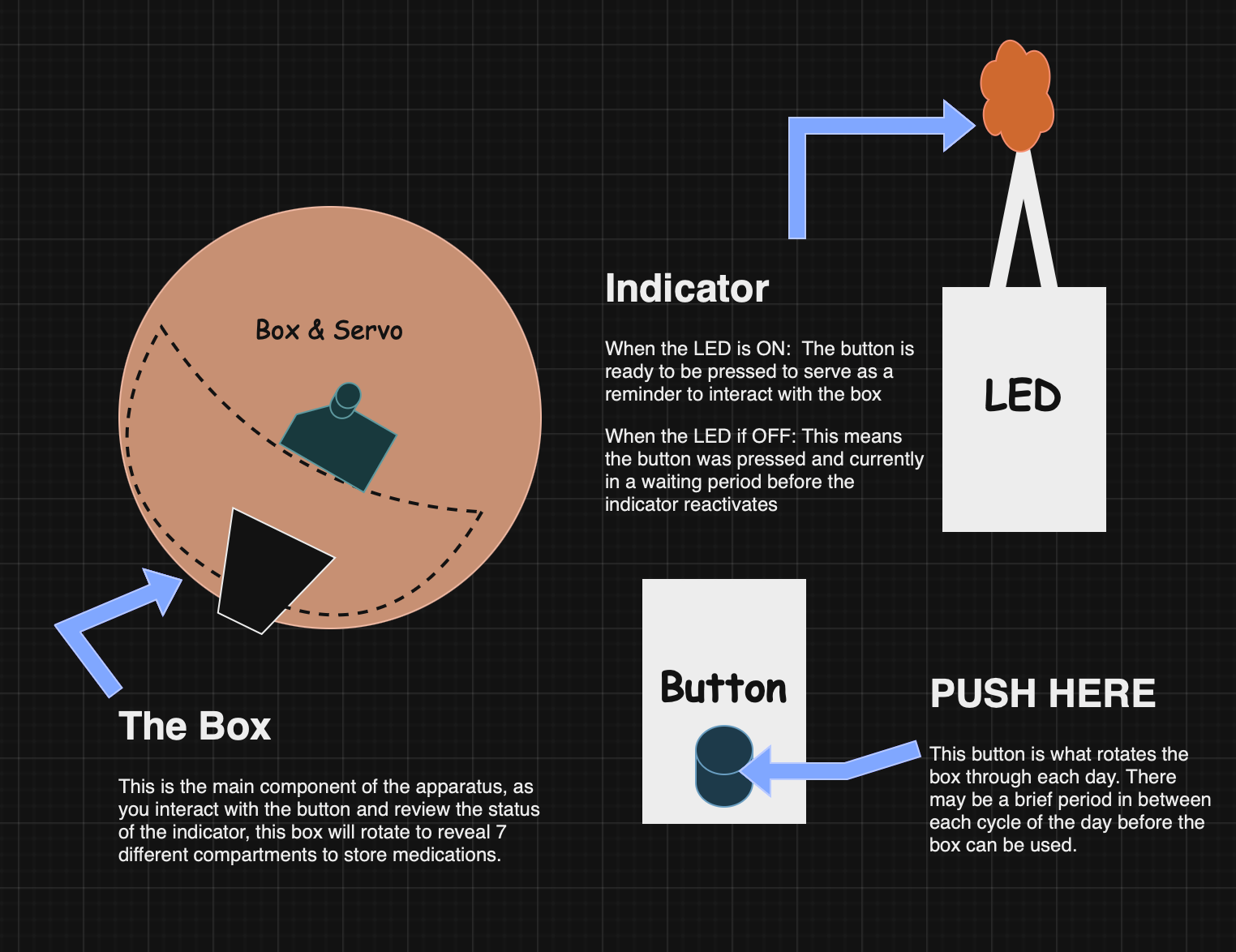
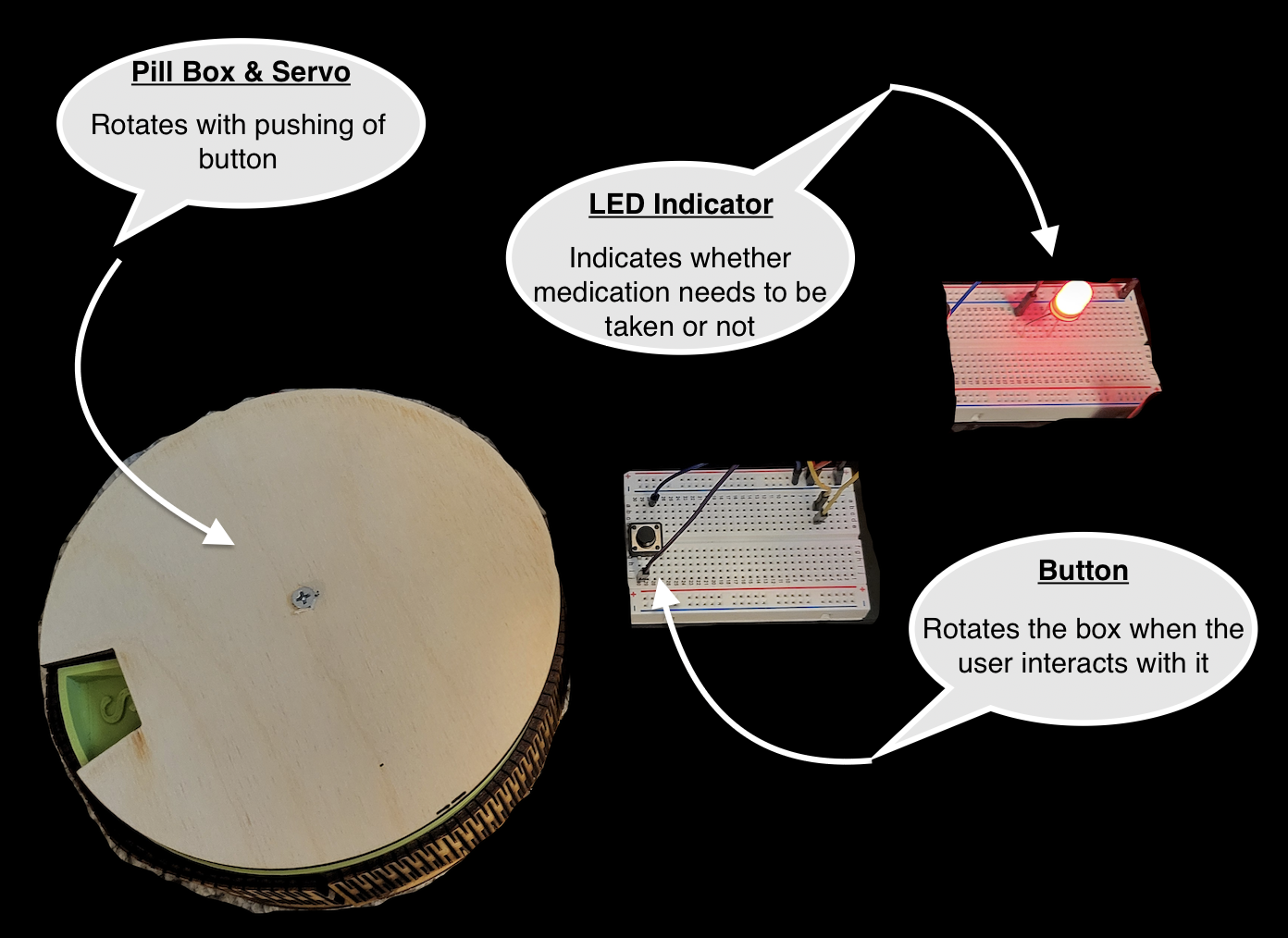
- Document the wiring, concept model, user workflow, and operating steps.
- Practice structured troubleshooting from concept through prototype testing.
Results
The final prototype used a Raspberry Pi, GPIO-driven LED indicator, button input, and servo motor to rotate the pill container through the days of the week. The work strengthened my debugging, hardware-software integration, and project management skills, especially while tuning the servo positions and timing logic so the box responded predictably.
Build Evidence
Demonstration Video
This interview and demonstration walks through the working box, the humanitarian goal, and my reflection on the assignment.
Python Control Logic
The code below is the Raspberry Pi program used to cycle the servo through daily positions, toggle the LED reminder state, and wait for button input before moving to the next compartment.
User Manual
The user manual documents the prototype purpose, Raspberry Pi startup workflow, Thonny launch steps, button/LED interaction model, refill timing adjustment, and glossary for the core hardware components. The DOCX source is included alongside the public PDF so the original formatted project document remains available.

