
Overview
ThreatLocker had been introduced at ETC TechSolutions but was not yet being used as an active security control. My role was to help turn it into a practical part of the security program by documenting the platform, improving deployment workflows, diagramming the implementation logic, and supporting adoption.
Objectives
- Document key ThreatLocker features, functionality, and implementation steps.
- Rewrite and optimize RMM automation for installation and uninstallation.
- Use Microsoft Visio to model deployment states, dynamic groups, monitors, and exception paths.
- Parameterize RMM logic around reusable company-level and endpoint-level custom fields.
- Develop training resources for clients and technicians.
- Integrate ThreatLocker access into the company portal to improve usability.
- Review firewall policies to strengthen security and simplify maintenance.
Results
The project helped transform ThreatLocker into a more actively managed security solution. Documentation and training created a clearer adoption path, Visio diagrams made technician handoffs easier to follow, RMM automation made deployment more repeatable, and portal integration improved client engagement around security requests.
End-User Training Video
I also created an instructional video for end users so they could understand what ThreatLocker does on their systems, what a blocked application looks like, and how to raise exception requests when legitimate work is interrupted.
Evidence
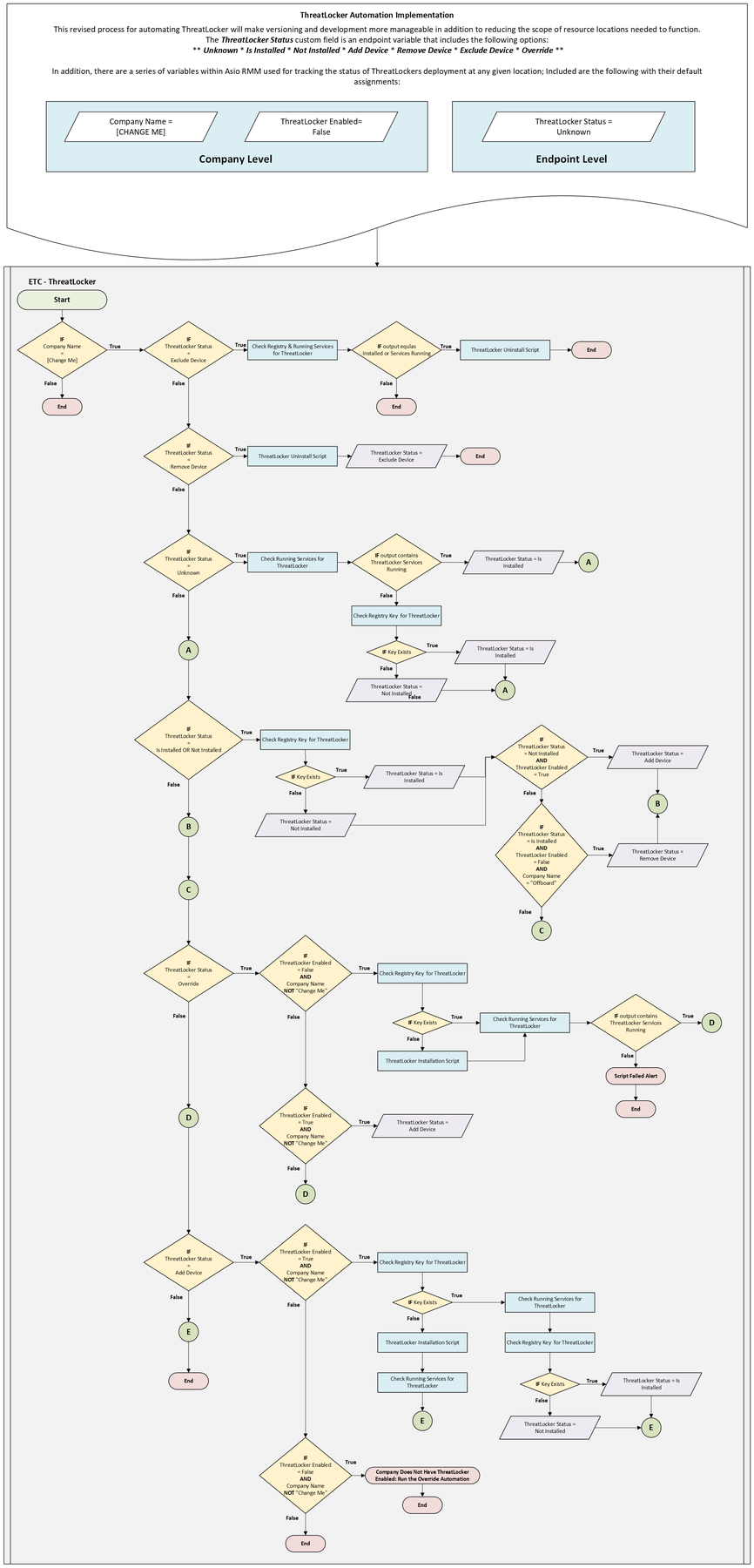
The revised flowchart documents the decision path for company-level and endpoint-level deployment status, including install, uninstall, override, add device, remove device, and exception states.
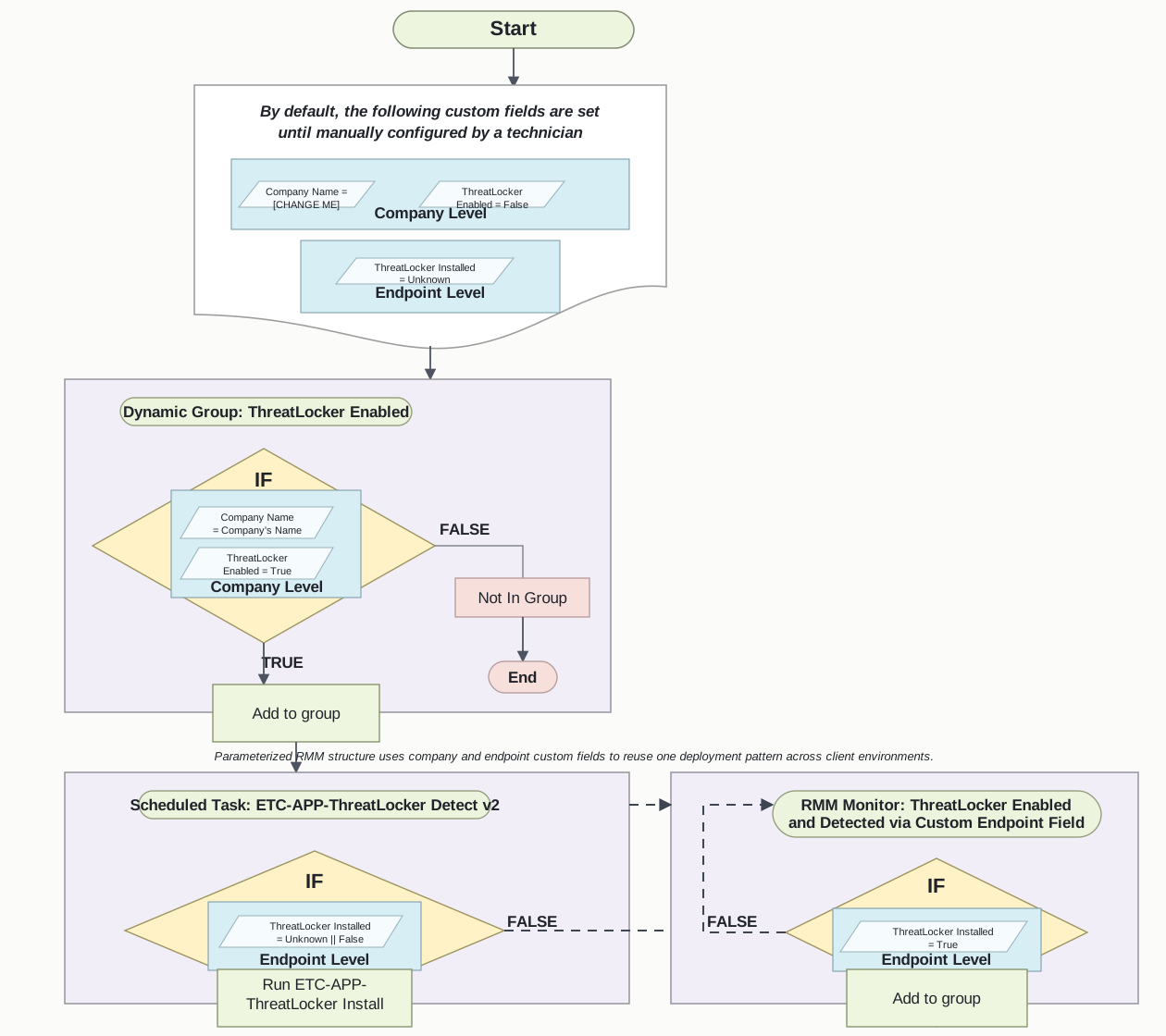
The supplemental Visio-style snapshot extends the deployment map by showing the default custom fields, dynamic group membership, scheduled task detection, and RMM monitor loop. The structure supports one generalized deployment pattern where unique company identifiers and endpoint status values are passed into parameterized RMM logic instead of rebuilding separate automation for each client.
